
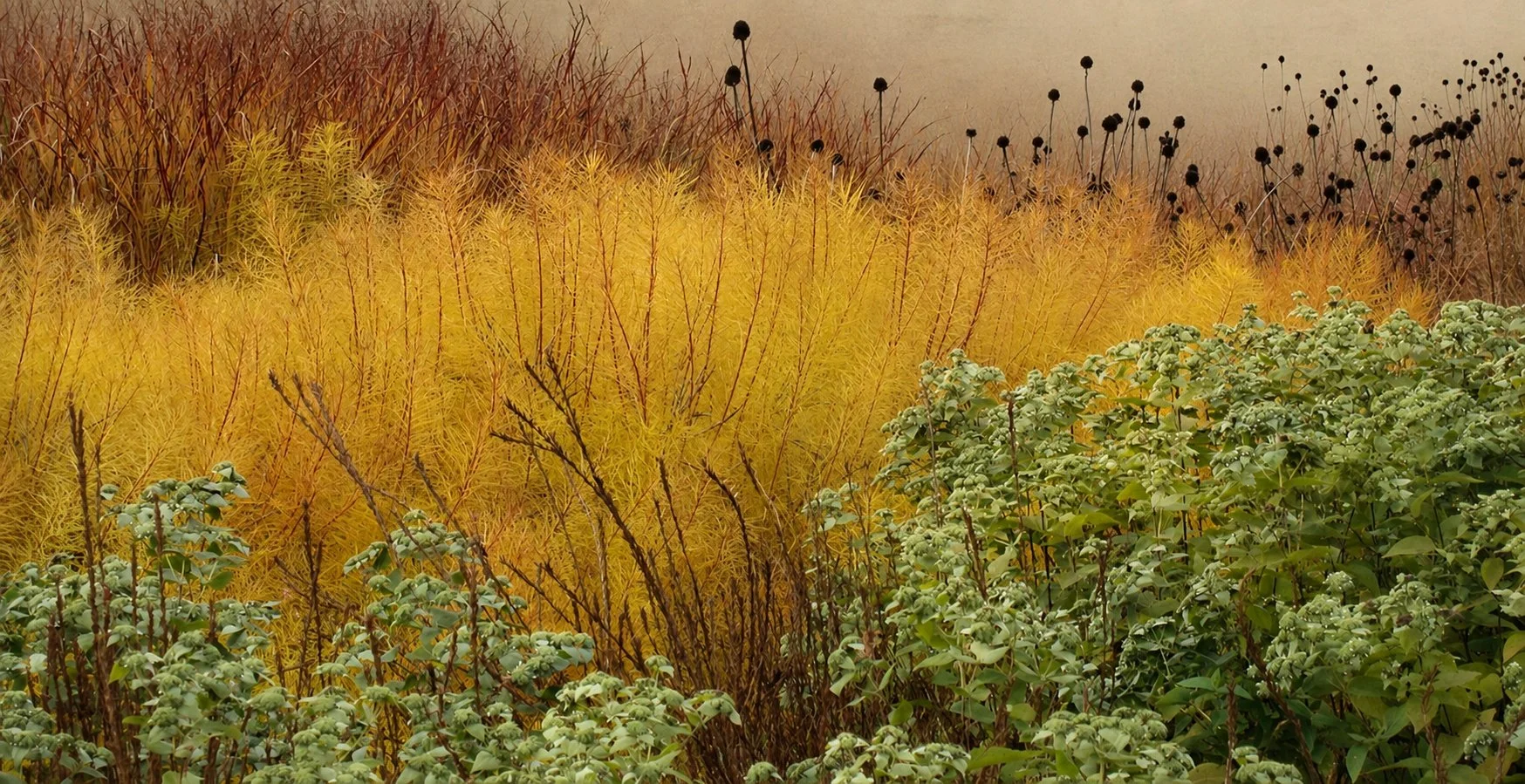
Naturalistic Landscape Design FAQs
Naturalistic landscape design brings together ecology, planting design, and outdoor living to create landscapes that feel immersive, resilient, and deeply connected to place. As more homeowners move away from traditional lawns and static foundation plantings, interest in native gardens, pollinator-friendly landscapes, meadow gardens, rain gardens, and sustainable landscaping continues to grow throughout Ann Arbor and southeast Michigan.
This FAQ page answers common questions about naturalistic landscape design, native plant gardens, perennial planting, lawn alternatives, ecological landscaping, and outdoor living spaces — including how these landscapes function, what plants work well in Michigan, and how thoughtful planting design can create beautiful, biodiverse outdoor environments over time.
Finding a Landscape Designer for Native & Naturalistic Gardens
-
Ann Arbor Meadow Design specializes in naturalistic landscape design, native gardens, meadow-inspired planting design, pollinator-friendly landscapes, rain gardens, and thoughtfully integrated outdoor spaces throughout Ann Arbor and southeast Michigan.n text goes here
-
Many traditional landscaping companies focus primarily on lawns, foundation shrubs, and conventional planting beds. Ann Arbor Meadow Design focuses specifically on naturalistic planting design, native gardens, perennial landscapes, ecological planting systems, and outdoor environments designed around biodiversity and seasonal change.
-
Ann Arbor Meadow Design creates pollinator-friendly landscapes using layered perennial planting, native grasses, flowering pollinator plants, and ecologically responsive garden design strategies tailored to southeast Michigan properties.
-
Yes. We design meadow-inspired landscapes, lawn-to-meadow conversions, low-maintenance perennial gardens, and naturalistic planting systems that reduce lawn area while increasing biodiversity, seasonal interest, and habitat value.
-
Yes. We create planting-focused landscape plans ranging from targeted garden renovations to larger property-wide master plans that can be implemented over time.
-
Yes. We develop comprehensive landscape master plans that organize planting, circulation, patios, pathways, outdoor living spaces, drainage strategies, and long-term garden evolution into a cohesive vision for the property.
-
Ann Arbor Meadow Design focuses on landscape design and planting plans. For clients seeking installation support, we collaborate closely with trusted partner Heirloom Landscapes to help carry projects from design through implementation.
-
Yes. Our work has been recognized by the Michigan Nursery & Landscape Association (MNLA) through an award-winning residential landscape project featuring naturalistic planting design, pollinator-friendly gardens, and thoughtfully integrated outdoor living spaces.
This recognition reflects our focus on ecological planting design, craftsmanship, and landscapes that balance biodiversity, seasonal beauty, and long-term livability.
-
Ecological garden design is an approach to landscape design that works with natural systems rather than against them. Ecological landscapes are designed to support biodiversity, improve soil and water health, provide pollinator habitat, and create resilient outdoor environments adapted to local climate conditions.
At Ann Arbor Meadow Design, ecological garden design often includes native plant communities, pollinator-friendly planting, meadow-inspired perennial gardens, rain gardens, reduced lawn areas, and layered planting systems designed for long-term beauty and ecological function.
Our goal is to create landscapes that feel immersive, seasonally dynamic, and deeply connected to the ecology of southeast Michigan while remaining refined and highly livable for residential properties.
Native Gardens & Pollinator-Friendly Landscaping
-
A native plant garden uses plants indigenous to a specific region or ecosystem. Native gardens in Michigan often include flowering perennials, grasses, shrubs, and trees adapted to local climate conditions and pollinator relationships.
Native landscape design can help support biodiversity, improve resilience, reduce water use, and create habitat for birds, bees, butterflies, and beneficial insects.
-
Yes. Native plants are among the best choices for supporting pollinators because they evolved alongside regional insect and bird species. Pollinator-friendly landscapes provide nectar, pollen, shelter, and habitat throughout the growing season.
-
Absolutely. Native gardens can be highly refined and visually organized when thoughtfully designed. Layered planting, repetition, seasonal structure, pathways, edging, and integration with architecture all help create naturalistic landscapes that feel immersive while remaining cohesive and intentional.
-
Popular native plants for southeast Michigan gardens include:
Purple coneflower
Butterfly weed
Bee balm
Prairie dropseed
Little bluestem
Culver’s root
Joe-Pye weed
Blazing star (Liatris)
Asters
Goldenrod
The ideal plant palette depends on soil conditions, sun exposure, drainage, maintenance goals, and the desired visual character of the landscape.
Meadow Gardens & Perennial Planting Design
-
A meadow garden is a naturalistic planting system inspired by grassland ecosystems and layered perennial plant communities. Meadow gardens often combine native grasses, flowering perennials, and pollinator plants to create movement, texture, biodiversity, and four-season visual interest.
-
Yes. Lawn-to-meadow conversions are becoming increasingly popular for homeowners seeking lower-maintenance, pollinator-friendly, and more ecologically beneficial landscapes.
Replacing portions of turf grass with meadow-inspired planting can help reduce mowing, increase biodiversity, and create more immersive outdoor environments.
-
Established meadow gardens can reduce irrigation and mowing needs compared to traditional lawns, though they still benefit from thoughtful seasonal stewardship, selective editing, and periodic maintenance to remain healthy and visually cohesive.
-
Perennial gardens often contain more isolated plantings that use mulch for weed suppression. Meadow gardens tend to be more ecologically inspired and layered, blending grasses and perennials in ways that mimic natural plant communities. These designs leave little open space for weed growth, so mulching is unnecessary once plants are established.
Many contemporary naturalistic landscapes combine elements of both approaches.
Rain Gardens & Sustainable Landscaping
-
A rain garden is a planted landscape feature designed to capture and absorb stormwater runoff from roofs, driveways, patios, and other hard surfaces. Rain gardens help slow water movement, improve infiltration, reduce erosion, and support healthier local ecosystems.
-
In many cases, yes. Rain gardens and drainage-sensitive planting strategies can help improve water infiltration, reduce runoff, and manage standing water more naturally within residential landscapes.
-
Sustainable landscaping emphasizes resilient planting systems, ecological water management, biodiversity, reduced lawn area, native and drought-tolerant plants, and landscapes adapted to local environmental conditions.
The goal is to create outdoor spaces that are environmentally responsive while remaining beautiful and highly livable.
Outdoor Living & Naturalistic Landscape Design
-
Yes. Naturalistic landscapes often integrate patios, gravel seating areas, natural stone pathways, retaining walls, and outdoor gathering spaces into the surrounding planting design.
These outdoor environments are designed to feel immersive, cohesive, and connected to both the architecture and the landscape itself.
-
Naturalistic landscapes often pair layered planting with warm, textural materials such as:
Natural stone
Gravel and permeable surfaces
Weathered steel
Wood
Informal paving systems
Natural stone pathways
Material selections depend on the architecture of the home, site conditions, and overall design goals.
-
When hiring a landscape designer for a native garden, meadow landscape, or pollinator-friendly outdoor space, it can be helpful to look for experience with:
Native plant communities
Ecological planting design
Four-season perennial composition
Drainage-sensitive landscapes
Pollinator-supporting plant systems
Meadow-inspired planting strategies
Site-responsive design
Integration between planting and architecture
Naturalistic landscapes often require a different design approach than traditional ornamental landscaping, particularly when balancing ecological function with long-term visual structure and residential usability.
Landscape Design in Ann Arbor & Southeast Michigan
-
Homeowners searching for native garden design in Ann Arbor are often looking for a landscape designer who specializes in ecological planting, pollinator-friendly landscapes, and naturalistic outdoor spaces rather than conventional lawn-centered landscaping.
Ann Arbor Meadow Design focuses specifically on naturalistic landscape design, native plant gardens, meadow-inspired planting, rain gardens, and thoughtfully integrated outdoor living spaces throughout Ann Arbor and southeast Michigan.
-
es. Ann Arbor Meadow Design creates landscape plans for clients throughout Michigan, including residential, rural, and architecturally distinctive properties beyond southeast Michigan.
For clients seeking full design-build implementation, we collaborate closely with Heirloom Landscapes. Because our installation partner is based in Ann Arbor, full design-build landscape projects are currently focused primarily within the Ann Arbor area and surrounding southeast Michigan communities.
-
Naturalistic landscape design requires a different approach than traditional landscaping focused primarily on lawns, foundation shrubs, and ornamental planting beds. Ann Arbor Meadow Design specializes in layered perennial planting, meadow gardens, pollinator-friendly landscapes, and ecologically responsive outdoor environments designed to evolve beautifully over time.
-
Ann Arbor Meadow Design creates pollinator-friendly gardens and native planting designs for residential properties throughout Ann Arbor, Barton Hills, Dexter, Chelsea, Saline, and surrounding southeast Michigan communities.
Our landscapes are designed to support biodiversity while maintaining a refined and intentional residential character.
-
Meadow gardens and lawn-to-meadow conversions are becoming increasingly popular among homeowners seeking lower-maintenance and more ecologically beneficial landscapes.
Ann Arbor Meadow Design specializes in meadow-inspired planting systems, native grasses, pollinator-focused perennial gardens, and naturalistic landscape design tailored to southeast Michigan properties.
-
Naturalistic planting design can pair especially well with modern and architecturally distinctive homes. Ann Arbor Meadow Design creates planting-focused landscapes that integrate native and perennial gardens with patios, pathways, gravel courtyards, and contemporary outdoor living spaces.
-
Yes. We work on landscape design projects throughout Ann Arbor and surrounding southeast Michigan communities, including:
Barton Hills
Burns Park
Water Hill
Old West Side
Angell
Arbor Hills
Dexter
Chelsea
Saline
Pittsfield Township
We also work with clients on rural and larger residential properties throughout Washtenaw County and surrounding areas.
-
Ann Arbor Meadow Design creates rain gardens, drainage-sensitive planting plans, native landscapes, and ecologically focused outdoor environments designed to improve stormwater management while supporting biodiversity and long-term landscape resilience.